Walking down West 47th Street, the sheer density of glittering storefronts is overwhelming. For a first-time buyer, the Diamond District can feel less like a romantic milestone and more like a high-stakes negotiation. But beneath the hustle lies the world's most concentrated market for fine diamonds. As a Master Gemologist who has spent decades navigating these blocks, I can tell you that New York remains the best place on earth to buy a diamond—if you know how to read the room. This guide is your insider's map to the 2026 market.
The 2026 New York Diamond Market: What's Changed?
The landscape of diamond buying in New York has shifted significantly in the last two years. The rise of lab-grown diamonds has created a bifurcated market. Natural diamond prices have stabilized after post-pandemic volatility, while lab-grown prices have plummeted. In 2026, the savvy buyer distinguishes between these two categories not just on price, but on long-term value and emotional resonance. The Diamond District remains the epicenter for natural stones, but you must be vigilant about certification and sourcing.
Neighborhood Showrooms: Midtown vs. Downtown
While the Diamond District (47th Street between 5th and 6th Avenues) is the historic hub, the luxury retail landscape has expanded. Madison Avenue and SoHo now host high-end boutiques with different pricing structures. However, for value and selection, the Diamond District still offers the most competitive pricing due to the sheer volume of wholesalers and cutters operating in a four-block radius.
| Neighborhood | Typical Price Range (1ct G/VS1) | Atmosphere | Best For |
|---|---|---|---|
| Diamond District (47th St) | $5,500 – $7,800 | High-pressure, wholesale | Value hunters, custom work |
| Madison Avenue | $9,000 – $14,000 | Luxury, appointment-only | Brand prestige, service |
| SoHo | $7,500 – $11,000 | Trendy, designer-focused | Unique settings, fashion |
| Brooklyn (Williamsburg) | $6,000 – $9,000 | Boutique, indie designers | Custom, local artisans |
Understanding the 4Cs in the New York Context
Globally, the 4Cs are the standard. But in New York, the nuances of cut and fluorescence carry more weight due to the high volume of inventory. You can afford to be picky here.
Cut: The Only Non-Negotiable
Cut is the most important factor for brilliance. In New York, you will see a range of cuts from 'Fair' to 'Excellent'. I advise my clients to never go below 'Very Good'. The difference in sparkle is visible to the naked eye. GIA's cut grade system is the gold standard. Look for the GIA cut grade on the report.
Color and Clarity: Where to Save
In a city with diverse lighting—from the subway to candlelit restaurants—color and clarity can be slightly relaxed. A G-color diamond (near colorless) set in yellow gold will look identical to a D-color stone. Similarly, an SI1 clarity diamond with eye-clean inclusions offers significant savings over VVS stones. The key is to inspect the stone under magnification and in natural light.
| Characteristic | Premium Range | Value Range | NYC Buyer Tip |
|---|---|---|---|
| Cut | Excellent | Very Good | Always prioritize cut over carat |
| Color | D-F | G-J | G-J is indistinguishable in yellow gold |
| Clarity | FL-VVS2 | VS1-SI1 | SI1 can be eye-clean, save 20-30% |
| Carat | 1.00ct+ | 0.90ct | 0.90ct looks like 1ct, saves 15% |
The Lighting Trick: How Showrooms Manipulate You
This is the single biggest trap in the Diamond District. Jewelry stores use specialized lighting—often high-color-temperature LED or halogen—to mask color and enhance sparkle. A diamond that looks icy white in the store may look yellow in your living room. Always ask to view the stone in natural daylight. Step outside the store, even if it's just to the doorway. If they refuse, walk away.
- Red Flag: A dealer who won't let you use a loupe or view the stone outside.
- Red Flag: 'Wholesale to the public' signs—everyone is retail.
- Tip: Bring a small white LED flashlight and a jeweler's loupe (10x).
- Tip: Check the GIA report number on the girdle with a loupe to match the certificate.
- Red Flag: Cash-only demands with no receipt. Always pay by credit card or traceable method.
Verification Process: How to Authenticate Your Diamond
In New York, trust is built on verification. Follow this step-by-step process to ensure you are getting what you pay for.
- Check the Certificate: Ensure the diamond comes with a GIA or IGI report. GIA is the most respected for natural diamonds.
- Verify the Report Number: Go to GIA.edu and enter the report number. Confirm the diamond's specs match the report.
- Loupe the Girdle: Use a 10x loupe to find the laser-inscribed report number on the girdle of the diamond. It should match the certificate.
- Check the Hallmark: For the setting, look for hallmarks like '14K', '18K', 'PT' (Platinum), or '925' (Sterling Silver). In the US, '14K' means 58.3% gold.
- Independent Appraisal: After purchase, get an independent appraisal from a gemologist not affiliated with the seller. This is crucial for insurance.
Hallmark Inspection: What to Look For
Hallmarks indicate metal purity. In New York, you'll see '14K', '18K', 'Platinum', or 'PT950'. Be wary of 'Gold Plated' or 'Gold Filled' stamps. For engagement rings, 14K and 18K are standard. 18K is softer but richer in color; 14K is more durable for everyday wear.
Setting Selection: The Architecture of the Ring
The setting can make or break the ring. In 2026, we see a resurgence of yellow gold and a rise in mixed-metal designs. The setting should complement the diamond and the wearer's lifestyle.
Popular Settings in NYC
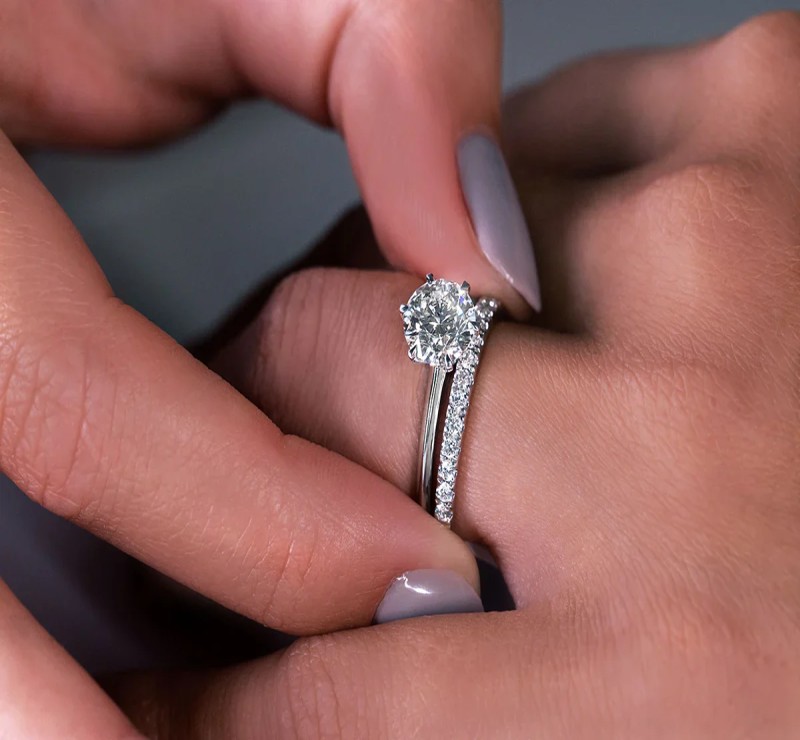
- Solitaire: Classic, timeless. The Tiffany-style six-prong is a New York staple.
- Halo: Adds perceived size. Popular in the Diamond District for maximizing carat weight.
- Three-Stone: Symbolizes past, present, future. Often custom-made in NYC.
- Bezel: Modern, protects the diamond. Great for active lifestyles.
Local Buying Tips: Navigating the Diamond District
Timing is everything. Avoid Fridays and Sundays if you want undivided attention. Weekday mornings are best. Build a relationship with a dealer—they are more likely to offer better prices to repeat customers. Don't be afraid to negotiate; a 10-15% discount off the asking price is common for cash or wire transfer.
Sales Tax and Legal Considerations
New York City sales tax is 8.875%. However, if you are shipping the ring out of state, you may not have to pay NYC sales tax. Consult a tax professional. Also, ensure you get a detailed receipt with the diamond's specifications and the return policy. New York law requires a 30-day return policy for online purchases, but in-store policies vary.
Frequently Asked Questions
Q: Is it safe to buy an engagement ring in the Diamond District?
A: Yes, if you stick to reputable dealers with GIA-certified stones and verify the certificate. Avoid street-level hawkers and always get an independent appraisal.
Q: How much should I spend on an engagement ring in 2026?
A: The 'two months salary' rule is outdated. Spend what you can afford without debt. In NYC, a quality 1-carat ring can range from $5,000 to $15,000 depending on the 4Cs.
Q: What is the difference between GIA and IGI certificates?
A: GIA is the most rigorous and respected for natural diamonds. IGI is often used for lab-grown diamonds and is also reputable but less strict on color/clarity grading.
Q: Can I negotiate the price of a diamond in New York?
A: Absolutely. Negotiation is expected. A 10-15% discount is standard, especially if you pay by wire transfer or cash.
Q: How do I insure my engagement ring?
A: Get an independent appraisal and add a rider to your renter's or homeowner's insurance policy. Jewelers Mutual is a popular specialist insurer.
Conclusion & Next Steps
Buying an engagement ring in New York is a rite of passage. The city offers unparalleled access to the world's finest diamonds, but it requires a sharp eye and a bit of homework. Prioritize cut, verify your certificates, and always view the stone in natural light. With this guide, you are equipped to navigate the 2026 market with confidence. Your perfect ring is waiting—go find it.