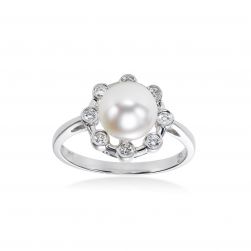
Los Angeles has long been a global epicenter for diamond and jewelry commerce, but the 2026 market presents unique opportunities and challenges for engagement ring buyers. With the rise of lab-grown diamonds, fluctuating precious metal prices, and an increasingly sophisticated consumer base, navigating the City of Angels' jewelry landscape requires more than just a good eye—it demands gemological literacy and local market intelligence. This guide, crafted by Diamond District Block's senior analysts and master gemologists, dissects the Los Angeles engagement ring market, from the historic Jewelry District to high-end boutiques in Beverly Hills, providing a roadmap for securing quality, value, and craftsmanship.
Los Angeles Engagement Rings Market Landscape: Consumer Realities in 2026
Southern California's engagement ring market has evolved into a multi-tiered ecosystem, shaped by economic shifts, demographic trends, and technological disruption. The Los Angeles metropolitan area, home to over 13 million residents, boasts one of the highest concentrations of jewelry retailers and wholesalers in the United States. The historic Downtown Los Angeles Jewelry District, centered around Hill Street and Broadway, remains the largest wholesale hub on the West Coast, with over 5,000 jewelry businesses operating within a few square blocks. However, the 2026 consumer faces a market where the average engagement ring spend has risen to approximately $6,500, according to industry surveys, driven by customization trends and a preference for larger, higher-quality stones.
Regional shopping habits reveal a bifurcated market: while Downtown's wholesale corridors attract value-conscious buyers and trade professionals, the Westside—including Beverly Hills, Santa Monica, and Century City—caters to luxury clientele seeking branded designer pieces and white-glove service. This geographic split directly impacts pricing; retail markups in high-rent districts can range from 2.5x to 3.5x wholesale, whereas Downtown showrooms often operate on slimmer margins. Understanding these micro-market dynamics is essential for buyers seeking to maximize value without compromising on quality.
Moreover, the 2026 Los Angeles market is characterized by a surge in lab-grown diamond acceptance. Once a niche category, lab-grown stones now account for nearly 40% of engagement ring center stones sold in the LA area, according to local trade data. This shift has pressured natural diamond prices, creating arbitrage opportunities for educated buyers. However, gemologists caution that lab-grown diamonds, while chemically identical, have different resale profiles and should be evaluated as consumer goods rather than investments. For those seeking natural stones, the Downtown district offers a vast array of certified Engagement Rings showroom inventory that spans the full spectrum of cut, color, and clarity grades.
Decoding the 4Cs and 2026 Los Angeles Engagement Rings Pricing Benchmarks
Price transparency in the Los Angeles engagement ring market hinges on a granular understanding of the 4Cs—cut, color, clarity, and carat weight—and how each variable influences value. In 2026, the price differential between a 1.00-carat and a 1.50-carat round brilliant diamond of identical color and clarity can exceed 60%, with the 1.50-carat stone commanding a premium due to its rarity and desirability. However, savvy buyers can exploit price breaks at certain carat thresholds; for instance, a 0.90-carat diamond often costs 15-20% less than a 1.00-carat stone but appears nearly identical to the naked eye.
Cut grade remains the most critical factor for brilliance and fire. The Gemological Institute of America (GIA) grades cut from Excellent to Poor; in the Los Angeles market, Excellent-cut diamonds typically command a 10-15% premium over Very Good cuts. Color grades D through F (colorless) are prized but expensive; G through J (near-colorless) offer significant savings with minimal visible difference when set in white metal. Clarity grades from Flawless to VS2 are generally eye-clean, while SI1 and SI2 stones may have inclusions visible under magnification but can be excellent value if the inclusions are not centrally located.
To illustrate these dynamics, consider the following comparison table of average retail prices for round brilliant diamonds in Los Angeles (2026), based on data from local showrooms and wholesale listings. Note that these figures represent mid-range retail and can vary by 20-30% depending on the retailer.
| Carat Weight | Color | Clarity | Cut | Avg. Retail Price (USD) |
|---|---|---|---|---|
| 0.90 | G | VS1 | Excellent | $4,800 |
| 1.00 | G | VS1 | Excellent | $6,200 |
| 1.50 | H | VS2 | Excellent | $11,500 |
| 2.00 | I | SI1 | Very Good | $14,000 |
When evaluating pricing, buyers should also consider the setting and metal. Platinum settings, favored for their durability and hypoallergenic properties, add $1,500-$3,000 to the total cost, while 18K gold settings range from $800-$2,000. For a broader selection of settings and styles, buyers can explore our curated Engagement Rings collection, which features a range of certified stones and designer mounts. Additionally, the 2026 market has seen a rise in alternative center stones, such as sapphires and pearls, offering unique aesthetics at lower price points. For example, a handcrafted pearl ring might retail for $2,500-$4,000, appealing to buyers seeking vintage-inspired designs.
Los Angeles Engagement Rings Showroom Selection and Merchant Vetting
Within the historic shopping corridors of Los Angeles, storefront overhead directly affects the final price of an engagement ring. The Downtown Jewelry District, with its dense concentration of wholesalers and retailers, offers the most competitive pricing but requires buyers to navigate a maze of options. In contrast, Westside boutiques incur higher rents, which are passed on to consumers. Therefore, location is a key strategic consideration: buyers willing to venture Downtown can access wholesale-level pricing, often 20-30% below retail, provided they vet merchants carefully.
Vetting a Los Angeles jeweler requires a multi-pronged approach. First, verify credentials: membership in the Jewelers of America (JA) or the American Gem Society (AGS) indicates a commitment to ethics and professionalism. Second, inspect the showroom's lighting. High-intensity spotlights can mask diamond color and clarity flaws; ask to view stones under diffused, natural, or ideal lighting conditions. Third, request GIA or IGI certificates for all diamonds above 0.50 carats and verify the certificate number on the laboratory's website. Fourth, inquire about return policies and warranties; reputable dealers offer at least a 14-day return window and lifetime maintenance plans.
Negotiation is standard practice in the Downtown district, where cash transactions and competitive bidding are common. Buyers should come prepared with pricing data from multiple sources and be ready to walk away. A typical negotiation can yield a 5-15% discount, especially on higher-carat stones. For a comprehensive overview of local merchants and their specialties, consult the Los Angeles Diamond District retail guide, which profiles vetted showrooms and provides insights into their inventory and pricing structures. Additionally, buyers should be wary of 'bait-and-switch' tactics, where a low-priced stone is advertised but unavailable, and 'upgrade' pressure to a lower-quality, higher-margin piece.
Custom Design, Bench Fabrication, and Certification Verification for Los Angeles Engagement Rings
Compared to machine-pressed gold settings, hand-fabricated platinum mounts provide superior durability and a bespoke aesthetic that appeals to Los Angeles' design-conscious buyers. Custom design in LA ranges from $2,500 to $10,000 for the setting alone, depending on complexity and metal choice. The process begins with a consultation, followed by CAD renderings, wax models, and final casting. Buyers should insist on seeing the bench jeweler's portfolio and ask about their experience with similar designs. Platinum, with a purity of 95%, is the gold standard for durability, while 18K gold (75% purity) offers a warmer tone but requires more maintenance.
Certification is non-negotiable for high-value purchases. The GIA and IGI are the most respected laboratories, and their reports include a unique report number, laser inscription on the diamond's girdle, and detailed grading of the 4Cs. To verify a certificate, visit the laboratory's website and enter the report number; the digital report should match the physical document. Additionally, check that the diamond's measurements and inclusions plot correspond to the stone. For colored stones and pearls, certifications from AGS or Gübelin are recommended. As an example of bespoke craftsmanship, consider the handcrafted Cultured 7.4 Carat Freshwater Pearl sol